Showing posts with label old. Show all posts

Sunday, September 2, 2012

Loganberry Wine - 1960's (possibly older)


Given Loganberrys are meant to be at their best about this time of year, I thought we'd do a seasonal wine today.

Loganberrys were discovered as a mistake when some raspberrys cross pollinated with a certain type of blackberry.  As a result they're a sort of super-blackberry, which is high in vitamin C and very tasty.  They also make a damn good wine, and if you happen to have 6lb of loganberry's lying around, this recipe that appears in the book '500 Recipes: Home-Made Wines and Drinks' by my favourite recipe lady Marguerite Patten which was published in 1963.


More than likely the recipe is older, but given the popularity of home-made wine and beers seem to come around in cycles I expect it will continue to be a home-brew favourite for years to come.  I am told by Google it is 'Refreshingly tart and fruity. Wonderful with fruit, cheese, nuts and smoked salmon' 

Recipe:
6lb loganberries
1 Gallon boiling water

To each gallon of water:
2.5 lb Sugar 1/4 oz of yeast

1. Put fruit into a container and pour over the water.
2. Mash firmly, pressing well to extract the juice and leave for 4 days to infuse.
3. Strain off liquid and measure.
4. Add sugar and yeast and leave in a warm place (65F to 75F) to ferment.
5. When bubbling ceases, stir well.
6. Leave for a further three days for the sediment to settle.
7. Strain through flannel or very thick muslin into a cask, filling this completely.  If not clear, see the instructions below
8. Cork and leave for 6 months.
9. Pour into bottles, cork and store in a cool dark place to mature for another few months at least.


My wine isn't clear? What should I do?
Marguerite has some instructions about what to do if your wine isn't clear.

"If, after straining, your wine does not look clear check carefully that you are using a fine enough filter.  It may well be that an extra two thicknesses of muslin, etc will immediately make a difference.
If, after fermentation and straining it is not clear, then you must use isinglass or egg white to ensure the wine is perfect to look at.  The white of one egg is sufficient for several gallons.  Whist it until firm, add to the wine in the container and leave for 24 hours.  You should then be satisfied with the result"

"It may well be that the haze or cloudiness in the wine is caused by the sediment which is disturbed by tipping the container when straining the wine.  This is why many people prefer to siphon rather than straining a wine.
There are actual faults in the wine that can cause a haze and this is a little difficult to rectify.  In a dry wine it may be because it is becoming a little vinegary, a condition which will get worse rather than better, so the wine must be used at once."


"In a sweet wine, it could be because the yeast in providing a special growth.  In this case the best solutions is to siphon the wine carefully into a new container, leaving the growth behind". 

Sunday, July 22, 2012

Authentic 19th Century American Tomato Ketchup recipe (Catchup) - edited 2026 for one bottle recipe


One of the things I love about old recipes is the process of decoding them.  Whilst having a quick scour through Google Books, I came across a very authentic recipe for genuine American 1800's tomato ketchup straight from Dr. Chase's recipes; or, Information for everybody; an invaluable collection of about eight hundred practical recipes

The recipe is credited to Mrs Hardy of the American Hotel, Dresden Ohio and according to Dr Chase is 'The best catchup which I have ever tasted'.


The history of ketchup is quite extensive so, as usual, go to http://en.wikipedia.org/wiki/Ketchup to get the background.

The quantity is a tad large.  I did some research, mostly Google based, and the recipe calls for 1 'bushel' of tomatoes.  According to common law, that equates to 53 lbs which is by anyone's standards quite a bit.  So this recipe is quite ready for a little bit of adjustment.


What do you need then?


1 bushel of tomatos, washed and clean.
Salt to taste,
2 cups of allspice
1 tea cup of ground cloves
1 quart of best vinegar

1. Wash and clean the tomatoes, chop them and boil them and then remove once reached boiling point.
2. Allow the tomato to cool and then rub them through a wire sieve.
3. Add salt to taste, the allspice, cloves and vinegar to the stuff that comes through the sieve.
4. Cook the mixture for an hour over a moderate heat, stirring constantly.

So here is the original text.  You can view it here too 


"CATCHUP Tomato Catchup 
Take perfectly ripe tomatoes 1 bushel (53lbs) wash them clean and break to pieces then put over the fire and let them come to a boil and remove from the fire when they are sufficiently cool to allow your hands to them rub through a wire sieve and to what goes through add salt 2 tea cups allspice and cloves of each ground 1 tea cup best vinegar 1 qt Put onto the fire again and cook 1 hour stirring with great care to avoid burning Bottle and seal for use If too thick when used put in a little vinegar If they were very juicy they may need boiling over an hour 

This recipe is from Mrs Hardy of the American Hotel Dresden 0 and is decidedly the best catchup which I lwve ever tasted the only fault I have ever heard attributed to it was I wish we had made more of it We have not got half enough of it &c But there are those who cannot use tomatoes in any shape such persons will undoubt edly like the following."


Credit for the photo goes to the Neo-Victorian Blog, which I found during the research for this recipe.

EDIT: 2026 - One bottle recipe!

The Scaled-Down Recipe (For One 500ml Bottle)

For those of us living in the present day with limited pantry space, here is a manageable version:

  • 2.5 kg Ripe Tomatoes (The riper, the better—don't be shy)

  • 1 tsp Salt (Adjust to your own palate)

  • 2 tsp Ground Allspice

  • 2 tsp Ground Cloves

  • 115 ml Cider Vinegar or Quality Malt Vinegar

Method: How to Process Your Catchup

1. The Preliminary Boil Wash your tomatoes and hack them into pieces. Place them in a large pan and bring them to the boil. This is not a refined process; you are simply breaking them down. Once they have reached a rolling boil, remove them from the heat.

2. The Sieve Work Wait for the mixture to cool sufficiently so you don't scald yourself, then rub the tomatoes through a fine wire sieve. This is the Victorian equivalent of a gym workout. You want the smooth pulp and juice; the skins and seeds are to be discarded.

3. The Spicing Add your salt, allspice, cloves, and vinegar to the strained liquid. You will notice immediately that this is far more aromatic and thinner than the gloop found in plastic squeeze bottles.

4. The Reduction Return the mixture to the heat. Simmer for at least an hour over a moderate flame. You must stir "with great care" to prevent it from catching and burning on the bottom of the pan—nothing ruins a historical experiment faster than the taste of carbon. If your tomatoes were particularly watery, keep simmering until it reaches a consistency that doesn't immediately offend you.

Storage and Final Thoughts

Bottle the mixture while hot and seal it. If, upon opening, you find it has thickened too much, simply stir in a splash of vinegar.

This ketchup is thin, sharp, and heavily spiced. It is a condiment for those who prefer their food to have a bit of character and for those who suspect that the 19th century, for all its lack of indoor plumbing, might have actually understood flavour better than we do.


Sunday, January 15, 2012

Beef Bake with Beer - 1980's

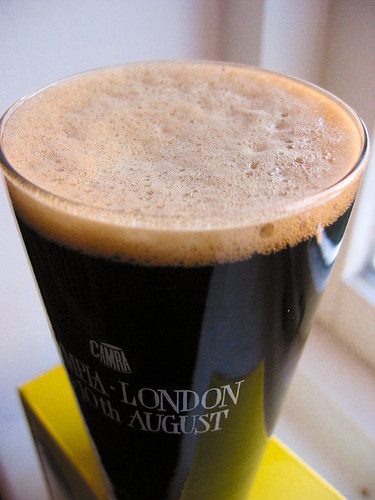
If you're in Exeter next week on the 21st January, the local CAMRA is holding their Winter Ales festival at the Exeter City Football ground in St James Park.  In tribute to this occasion, here is another beer related meal that can be experimented with and played around with.

15g Margarine
450g minced beef
1 x 225g packet of frozen mixed vegetables
200ml beef stock
300ml real ale
100g mushrooms, chopped
salt
freshly ground black pepper

Topping:
2 tomatoes, skinned and sliced
salt
freshly ground black pepper
450g thinly sliced potatoes
50g margarine
300ml plain yoghurt
1/4 teaspoon of ground nutmeg
50g grated cheese


1. Melt the marge in a saucepan and saute the meat for 5 to 10 minutes until browned.
2. Add the mixed vegetables, stock, real ale, and mushrooms.  Add salt and pepper to taste and then simmer for 30 minutes.
3. Turn into an ovenproof dish and arrange the tomatoes on top.
4. Sprinkle with salt and pepper.
5. Fry the potatoes in the marge until softened and arrange over the tomatoes.  Combine the yoghurt and nutmeg and pour over the potatoes.
6. Sprinkle with cheese and bake in a preheated moderately hot oven (200C) for 25 to 30 minutes until top is browned.

Fig Parkin Gingerbread - 1950's

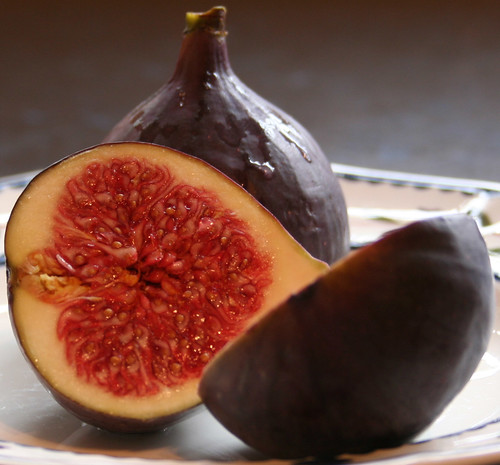
Figs are nice but not common.  If you can get your hands on some, then here is a little recipe that'd make a nice tea accompaniment or a quick fix for gingerbread-heads.

6 ozs. self raising flour
2 ozs. margarine
2 ozs. oatmeal
1 oz. sugar
4 ozs. figs
1 egg
1 teaspoonful of ground ginger
2 tablespoonfuls of syrup
Pinch of salt
little milk


1. Sift flour and salt into a bowl.  Rub in the marge, add sugar, ginger, oatmeal and chopped figs.
2. Melt syrup and add with beaten egg and milk to make a soft dropping consistency.
3. Turn into greased and lined tin and bake in a moderately hot oven for about 1.5 hours.